
Phone Farm
Book an Appointments

What a Phone Farm Setup Actually Does
Line up a dozen phones, wire them into one control point, and you’ve got a phone farm – a rig built to run the same task across every device at once, or split different jobs across each one. Testing teams use this setup constantly. Instead of manually running an app on ten different phone models, one operator triggers all ten from a single screen and watches the results come in together.
The reputation around phone farming isn’t spotless, with plenty of setups getting used for spam, fake engagement, and ad fraud. That side of it exists. But keeping that away, and the core use case holds up: software teams need a fast, repeatable way to see how an app behaves across real hardware, and a phone farm does exactly that without tying up a QA team for a week.
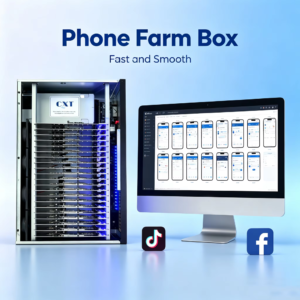
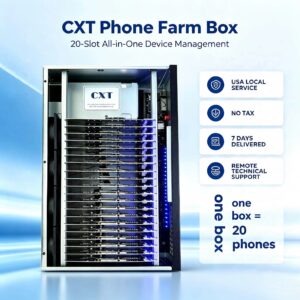
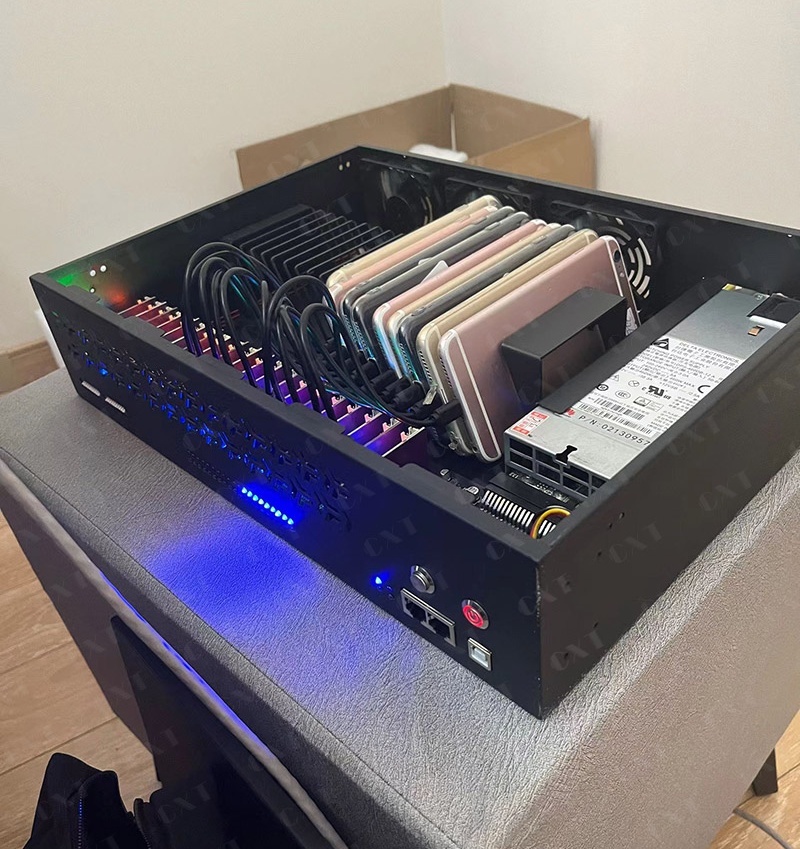
A phone farm box is the piece of hardware that makes this possible. It houses the phones (or just their motherboards, depending on the setup) and connects them to a PC running group-control software. From there, one person manages what would otherwise take a room full of testers.
Setting Up a Phone Farm Without Burning Money on Mistakes
Running a phone farm isn’t technically demanding, but a few decisions early on save a lot of trouble later.
- Power first. A rack of phones running around the clock needs power that doesn’t dip or spike. Cheap surge protectors aren’t enough – voltage instability kills devices faster than heat does.
- Know the number before you buy. Figure out how many devices the project actually needs before ordering hardware. A 12-drawer array covers small testing runs; a 300-device network needs router-level infrastructure, not a handful of USB hubs.
- Bandwidth matters more than people expect. Every phone pulling data at once adds up fast. A weak connection turns a 20-device farm into a bottleneck instead of a shortcut.
- Stick with trusted control software. Group-control apps handle sensitive access to every connected device – ADB permissions, file transfer, remote input. Software from an unverified source is a bigger risk than most people account for.
- Scripts are where the time savings come from. Manual taps across 50 phones defeat the purpose. Custom scripts, even simple ones, are what turn a phone farm into an automation tool instead of a very expensive shelf of phones.
- Mid-range hardware wins. Flagship phones cost more and don’t add anything to a testing rig. Mid-range devices with decent battery life do the job at a third of the price, in bulk
Do Phones Actually Hold Up Inside a Box Farm?
Yes, generally – but “generally” depends on upkeep. Devices packed tightly into a chassis generate heat, and heat is the actual failure point in most farms, not the phones themselves. Boxes built with cooling fans handle this fine as long as someone checks that the fans are still running. Skip that check for a few months and a warm rack turns into a rack full of overheating motherboards.
Power stability matters just as much. A farm that loses consistent voltage degrades faster than one running on a clean, steady supply – same logic as any electronics running 24/7.
Physical Farms vs. Cloud Device Farms
Cloud-based device testing has grown fast, and it’s easy to see why – no hardware to manage, and scaling up means clicking a bigger plan, not ordering more boxes. But a physical phone farm box still wins on a few fronts that matter for serious testing work:
- Performance doesn’t depend on someone else’s server load or your internet connection holding steady mid-test.
- Data stays on hardware physically in front of the team, not routed through a third-party cloud provider.
- Monthly cloud subscriptions add up. A physical rig costs more upfront but stops costing anything month after month.
- Direct hardware access means more control over how each device behaves – no abstraction layer in between.
The tradeoff is device count. Cloud farms scale instantly; a physical setup means ordering more boxes. For most testing and automation workloads, that tradeoff is worth it.
Main Components of a Phone Farm System
A well-designed phone farm system consists of several essential components that work together to ensure reliable performance, efficient device management, and easy maintenance.
Phone Farm Box
The phone farm box securely holds multiple smartphones while providing cable management, better airflow, reduced clutter, and easy maintenance.
Smartphones
A phone farm can include Android devices, iPhones, or multiple device models to perform testing across different operating systems and hardware.
Power Supply & Charging
Reliable charging solutions and power supplies ensure every smartphone remains powered during continuous operation.
USB Hub & Data Connectivity
USB hubs provide charging and data communication, making file transfers, diagnostics, and device management simple.
Cooling & Ventilation
Cooling systems maintain safe operating temperatures, reduce overheating, and improve the lifespan of connected devices.
Management Software
Centralized software allows users to monitor, configure, update, and manage all connected smartphones from one interface.
Why Teams Building a Phone Farm Choose CXT Factory
CXT Factory manufactures phone farm hardware built for continuous operation – not a repurposed shelf of consumer phones bolted together. Every box goes through the same production standard, whether the order is a single 12-drawer array or a network router built for ten thousand devices.
What comes with it:
- Setup guidance from a team that’s actually installed these racks before
- Cooling systems built to run without shutting down mid-task
- Free group-control software, no separate license fee
- Lightweight, durable materials that hold up to constant handling
- Support for gaming, streaming setups, digital marketing, e-commerce operations, lead generation, and software QA
So, if you are looking for more details, check our website and get high-quality products. Let us be your phone farming partner. Also, if you are confused about using Phone Box Farms, you can check out our manual section, where we will walk you step by step through your first automated task.