
Phone Farm: What to Look for When Choosing a Phone Farm Shop
Imagine you walk into a room where you see it filled with dozens of smartphones, all glowing with screens synced in perfect harmony – this is a phone farm, a powerful setup where automated tasks are run at the same time at a scale. While setting up a few spare devices on your desk is easy, scaling up to a massive hardware array requires you to have specialized gear from a reliable phone farm shop. Knowing what a proper shop should actually stock makes the difference between finding the right supplier on the first try and piecing equipment together from three different sellers.
What is a phone farm shop?
A phone farm shop is a supplier selling the hardware needed to build and manage a setup where multiple physical smartphones or phone motherboards run connected, controlled either as a group or individually
What People Are Actually Looking to Buy
When someone lands on a phone farm shop, they’re generally after one or more of these:
- Phone farm boxes built to house multiple devices in a single enclosure
- Android motherboard boxes for running stripped motherboards rather than full handsets
- 32PCS phone boxes for larger-scale device arrays
- 12PCS phone arrays for smaller or mid-sized setups
- iPhone farm boxes, since iOS devices often need different mounting and management hardware than Android
- Supporting device-management hardware and accessories that keep everything running and accessible
A shop worth buying from should stock a genuine range across these categories, not just one or two configurations dressed up as a full catalogue.
Why the Configuration You Choose Actually Matters
Not every setup needs the same hardware. Someone running app testing across a handful of devices has very different needs from a QA team managing dozens of motherboards for automated regression testing. According to CXT Factory, a phone farm is essentially a collection of interconnected mobile devices that can be controlled together or individually, with real applications spanning mobile app testing, software development, quality assurance, research, and automation work that genuinely benefits from running many devices at once rather than one at a time.
A few things worth checking against your actual use case:
- Device count per enclosure, since overbuying capacity wastes money and underbuying means retrofitting later
- Whether the box is built for full phones or stripped motherboards, since the two need different mounting and cooling
- Compatibility with mixed device brands if you’re testing or research work spans more than one platform
What CXT Factory Actually Stocks
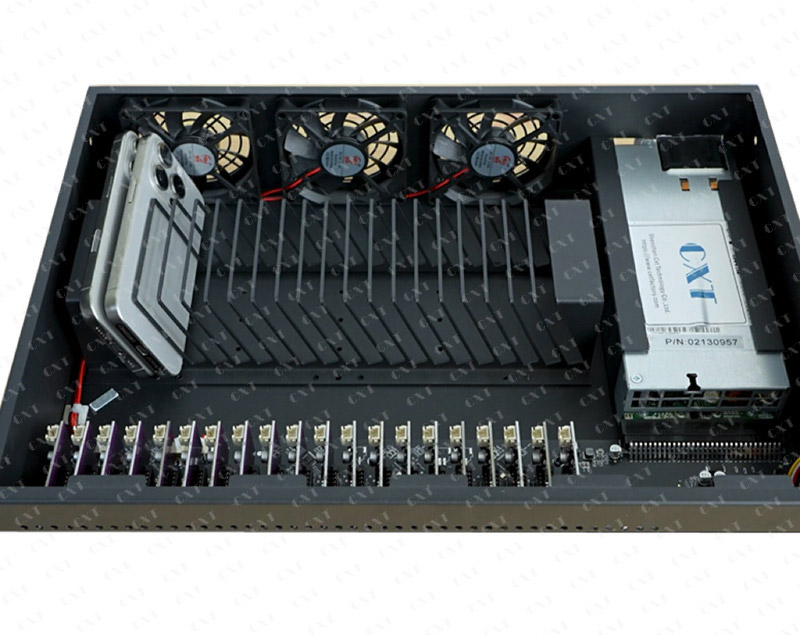
CXT Factory offers several configurations built around exactly these use cases. Its Android motherboard box houses 20 mobile phone motherboards within a single enclosure, which suits operations running device-level testing or automation at scale without the overhead of full handsets. Alongside that, the range includes 32-device phone boxes for larger arrays and 12-device phone arrays for smaller setups that don’t need full-scale infrastructure from day one.
Checking Build Quality Before You Commit
Beyond configuration, a decent phone farm enclosure needs proper airflow, accessible cabling, and a frame that holds up under continuous operation rather than warping once devices are running for extended stretches. A shop that can speak clearly to cooling design, port access, and mounting stability is usually one that actually understands the hardware, rather than reselling generic enclosures adapted after the fact.
Picking the Right Supplier
Comparing device capacity, build quality, and support against your actual testing or development needs is worth the extra ten minutes before ordering. The right phone farm shop gets you equipment that matches your workload from the start, rather than a setup you end up reconfiguring once the limitations show up in practice.