
Phone Farming Machine: Engineering a Reliable Multi-Device Test Environment

A phone farming machine is not just a rack loaded with smartphones. It is a specially engineered infrastructure consisting of multiple devices that enables the simultaneous powering, connection, availability, and operation of many physical smartphones in an enclosure. When it comes to mobile app developers, QA labs, device researchers, and testers, it becomes evident what the difference is between just a phone rack and a well-engineered system as the number of phones grows. In cases when there are several dozen smartphones operating at the same time, engineering problems are no longer related to storage but power, connectivity, heating, identification, cabling, and access. What Defines a Mobile Farming Device? While a mobile farming device connects together the supporting structure around the phones rather than taking each one as an independent unit. A proper system could include: Dense smartphone mounting Specific USB power and data connections Centralized power management Connectivity to each unit Proper cable management Ventilation and thermal space management Easy maintenance access Integration with the device management software The idea behind this is complete management control. Each unit should be identifiable, accessible, and maintainable without making the whole setup a mess of cables. Power Architecture Forms the Basis Power is one of the first restrictions that comes into play when there is a multi-device setup. Ten phone charging requires a different approach from 50 or 100 phones being charged at once. This takes into consideration the cumulative electrical load, connector capacity, the way the phone charges, and the heat emanating from the power supply components. The well-designed phone farming device therefore requires a power architecture as opposed to the over-taxed power adapters and cables. These include: Cumulative electrical load of the connected devices Output capacity of USB port Headroom in the power supply Quality of cable and its length Electrical load distribution Accessible connection Note: Number of devices must never be increased without confirming whether the power system can support it. Connectivity through USB is not just for charging When it comes to professional mobile testing, connectivity through USB is equally crucial as charging. The testing environment might require that computers connect to individual phones for ADB based android testing, installation, debugging, log extraction, automated tests running, and diagnostics of devices. This implies that the phone farming machine needs to be assessed in terms of USB architecture supporting the necessary data connectivity and not just the ability to charge the phones. Poorly planned USB configuration may lead to hard to detect errors when connecting several phones at once. When Heat Starts to Matter in Phone Installation Design Heat is often overlooked in dense phone installations.Smartphones emit heat during CPU use, charging, wireless communication, screen use, and automated testing. If smartphones are installed close to each other, the heat may be trapped instead of dissipated naturally. Proper device spacing and airflow thus become a part of the machine design. Be aware of: Good spacing between devices Proper air flow paths Ventilation near power supplies Lack of obstacles near heat-emitting parts Accessibility for cleaning and inspection Installation that doesn’t account for thermal properties may become unstable right when continuous testing is needed. Device Management Calls for Perfect Arrangement When there are several phones in one machine, then it is important that each phone is identifiable. Every phone must have an expected physical location and also its own software identifier. This is especially the case in instances where there is a need to recreate a failed test on one phone. This kind of arrangement will allow for easy association of: Physical port → Device ID → Model → OS version → Test environment Where Does the Use of a Phone Farming Machine Bring Most Benefit? Cases where it is most useful are those where the devices themselves offer data that cannot be emulated. Mobile Applications Testing Test applications on various devices, various screen sizes, various Android OS versions, various hardware, various cameras, sensors, and connection environments. Device Testing Automation Automate the testing of various devices while keeping the positioning and connections of the devices constant. Device Specific Issues Investigation Identify the issues related to touch functionality, sensors, camera, notifications, Bluetooth functionality, USB functionality, battery properties, or manufacturer software. Device Research Keep a controlled set of physical smartphones for research purposes. How to Judge a Phone Farming Device Do not choose a solution merely on the question, “How many phones will it contain?” Ask questions such as: What is the maximum amount of power that the system can safely deliver? Does USB handle both charging and necessary data functions? Can each device be uniquely recognized? Is there adequate ventilation between devices? Can one phone be taken out without disrupting the others? Are cables separately routed and organized? Does the system allow for additional devices in the future? Are parts easily replaceable? This set of questions highlights the distinction between dense storage and multi-device infrastructure. Build for Stability, Not Just Capacity Many devices look like a big achievement, but capacity does not necessarily mean that it is a professional phone farming machine. It is important to be stable while working with increased amounts of devices. Stability implies constant power supply, stable connections, moderate heat level, and simple maintenance with increasing numbers of smartphones. This point is especially important for developers and testers because the right organization of hardware helps engineers to spend less time on reconnections and search for necessary hardware components. Conclusion The phone farming machine must be developed as an entire system comprising multiple devices, rather than considering it a mere smartphone holder. The power distribution, data architecture of USB, thermal management, identification of device, and serviceability will decide the scalability of the system. In terms of mobile device testing and management, it is not necessarily about the machine that supports the most number of phones. Instead, it is about maintaining every device in the system powered, identified, accessible, and functional with more workload.

Phone Farming Machine: Engineering a Reliable Multi-Device Test Environment A phone farming machine is not just a rack loaded with smartphones. It is a specially engineered infrastructure consisting of multiple devices that enables the simultaneous powering, connection, availability, and operation of many physical smartphones in an enclosure. When it comes to mobile app developers, QA […]
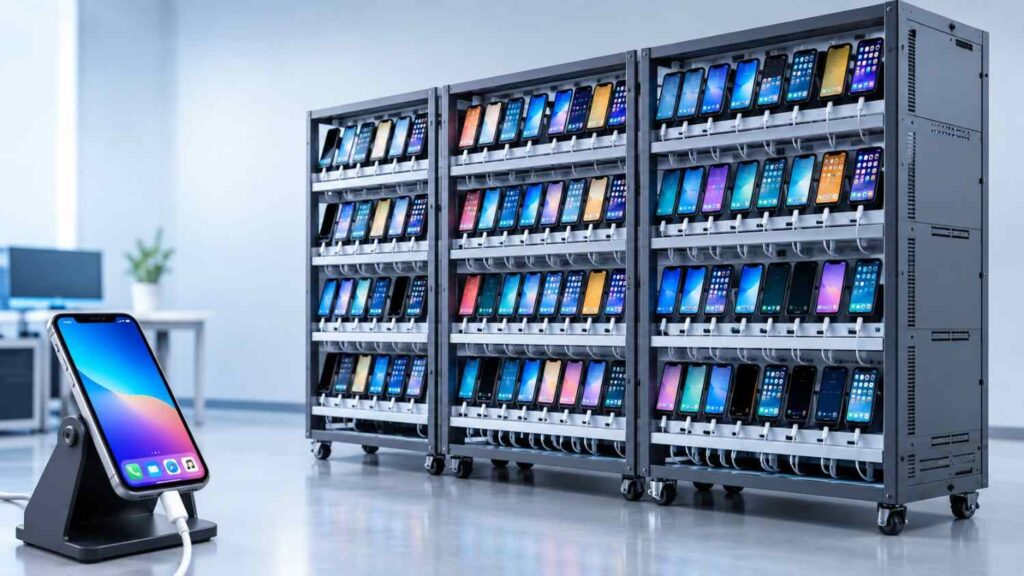
Phone Farm Setup: Hardware, Software, Network & Maintenance Guide
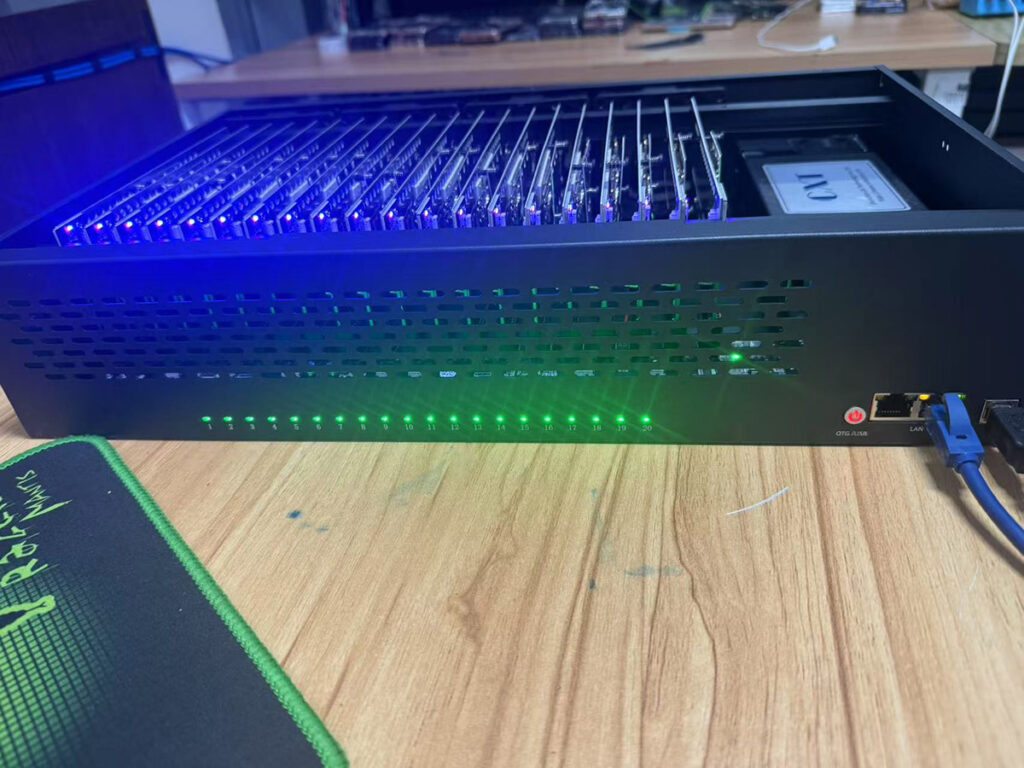
Phone Farm Setup: Hardware, Software, Network & Maintenance Guide

Phone Farm Setup: Hardware, Software, Network & Maintenance Guide 2026 A phone farm is a centralized system in which several smartphones are interconnected so that all of them could be controlled, monitored, and tested at once. Phone farms are used by enterprises and development groups for technical research, automation, compatibility tests, quality assurance, and mobile […]